Market Insights: HubSpot (HUBS) Deep Dive
Market Insights: HubSpot (HUBS) Deep DiveAnalyzing HubSpot's Growth Strategy, AI Integration, and Competitive Positioning in the CRM Landscape 6/2/2025
Deeper Dive Stock Analysis: HUBSHubSpot (HUBS): A Deep Dive into Growth and AI IntegrationHubSpot, a leading inbound marketing and sales software provider, continues to demonstrate robust growth driven by its expanding product suite and focus on the mid-market. Recent performance shows consistent revenue growth, exceeding analyst expectations, with Q3 2023 showing a 26% YoY increase. Key metrics like Annual Recurring Revenue (ARR) and customer count are also trending upwards, indicating strong customer acquisition and retention. Gross margins remain healthy, but profitability, while improving, is still a key area of focus.HubSpot's competitive position is unique. It differentiates itself from larger players like Salesforce by targeting small to medium-sized businesses with a user-friendly, all-in-one platform. While Salesforce dominates the enterprise CRM market, HubSpot excels in providing integrated marketing, sales, and service tools tailored for growth-oriented companies. This "land and expand" strategy, coupled with a freemium model, fuels customer acquisition. AI Integration & Salesforce Competition:HubSpot is actively integrating AI across its platform. AI-powered content creation tools, predictive lead scoring, and automated workflows are enhancing user productivity and improving campaign effectiveness. This focus allows them to compete more effectively with Salesforce, particularly in areas like marketing automation and customer service. While Salesforce has its own AI initiatives (Einstein), HubSpot's AI is often seen as more accessible and integrated for its target audience. Investment Outlook & Catalysts:The investment outlook for HubSpot is positive, albeit with a premium valuation. Industry trends like the increasing adoption of digital marketing and the demand for integrated CRM solutions support continued growth. Potential catalysts include further product innovation, expansion into new markets, and strategic acquisitions. However, risks include increased competition, macroeconomic headwinds impacting SMB spending, and the challenge of maintaining high growth rates as the company scales. Conclusion:HubSpot is a compelling growth story with a strong competitive position and a clear strategy for leveraging AI. While the valuation reflects its potential, the company's ability to execute on its product roadmap and navigate the competitive landscape will determine its long-term success. Investors should carefully consider the risks and potential rewards before investing in HUBS.Related News AnalysisSnippetsHubSpot's Road to Recovery: After Alphabet's buyout bid fizzled, HubSpot faces the challenge of reigniting growth, but analysts are optimistic about its potential driven by rising earnings estimates and AI innovation. Read more here. Big Data Stocks Primed for Takeoff: Looking for quick gains? These five big data stocks—CFLT, BLKB, SPT, HUBS, and TDC—show promise for delivering impressive returns in the near future. See the full list.Valuation Analysis: HUBS (bull case)HubSpot's (HUBS) Potential Earnings Power with 10% Revenue GrowthAssuming a consistent 10% annual revenue increase for HubSpot over the next five years, we can project potential earnings power, albeit with inherent uncertainties. Currently, HubSpot prioritizes growth over immediate profitability. While revenue growth is expected, profitability hinges on HubSpot's ability to manage operating expenses.Let's assume HubSpot can gradually improve its operating margin by 1% annually through economies of scale and increased efficiency. This is a conservative estimate, as SaaS companies often achieve higher margin expansion as they mature.With a starting point of current revenue and incorporating these assumptions, we can project revenue and operating income for the next five years. Applying a standard corporate tax rate, we can then estimate net income.The challenge lies in translating this net income into shareholder value. HubSpot's current high valuation reflects expectations of sustained high growth. A 10% growth rate, while healthy, might not justify the current premium indefinitely.Ultimately, HubSpot's future earnings power depends not only on revenue growth but also on its ability to control costs, expand margins, and maintain its competitive advantage in the crowded CRM and marketing automation space. While a 10% growth scenario paints a positive picture, a thorough valuation requires analyzing these factors in conjunction with comparable companies and broader market conditions. A discounted cash flow (DCF) analysis would be necessary to determine if the current stock price accurately reflects this projected earnings power.Portfolio Impact Analysis: HUBS (5.0%)Portfolio Impact Analysis: HubSpot (HUBS)HubSpot (HUBS) - 5.0% Allocation1. Market Impact: Recent market volatility, particularly concerns about rising interest rates and a potential economic slowdown, negatively impacts HUBS. Growth stocks like HubSpot are sensitive to higher rates as they discount future earnings more heavily. Additionally, a slowdown could impact marketing budgets, affecting HubSpot's revenue growth. 2. Correlation: HUBS exhibits a moderate-to-high correlation with the broader market (e.g., S&P 500), especially the technology sector. Downward market pressure generally translates to HUBS underperformance. 3. Sector Risks/Opportunities: The SaaS sector faces increased competition and pricing pressure. Opportunities lie in expanding product offerings (e.g., AI integration) and capturing market share from legacy CRM systems. However, sales cycles can lengthen in economic downturns. 4. Recommendation: Trim (1% Reduction - Target Allocation: 4%) - Timeline: 1-2 Weeks. While HubSpot's long-term prospects remain positive, trimming reduces exposure to growth stock volatility in the current environment. This frees up capital for potentially undervalued opportunities. 5. Risk Management: Implement stop-loss orders to protect against significant downside risk. Monitor customer acquisition costs and retention rates closely as leading indicators of performance. Overall Portfolio Health: The portfolio's health is currently moderate, affected by growth stock volatility. Diversification Analysis: A 5% allocation to HUBS is within reasonable limits for a diversified portfolio, but sector concentration should be monitored. Action Items:* Trim HUBS (1%): Reduce growth stock exposure amidst market uncertainty (1-2 weeks). * Evaluate Reinvestment Opportunities: Explore undervalued sectors like energy or healthcare for diversification (2-4 weeks). * Monitor Economic Data: Closely track inflation, interest rates, and GDP growth to adjust portfolio positioning proactively (Ongoing). Estimated Impact: Trimming HUBS by 1% will modestly reduce portfolio volatility. Success depends on identifying and capitalizing on alternative investment opportunities.This newsletter is for informational purposes only and does not constitute investment advice. Generated on 6/2/2025 | Investment Research Platform
|
Welcome to Golden Door
Learn about the latest technology investments here.
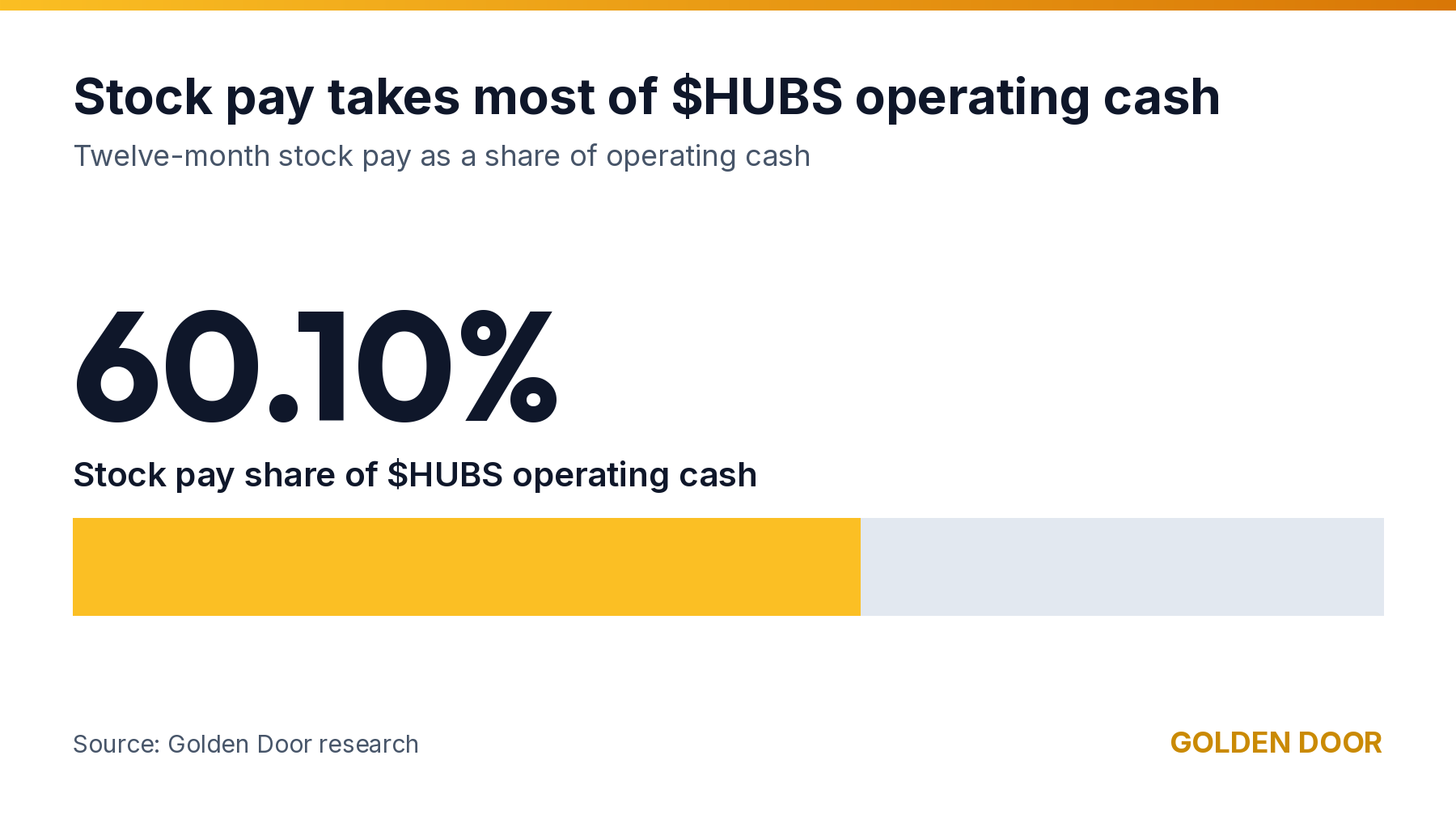
The open Today's theme: who really pays for stock pay, and what a true toll looks like by comparison. $WDAY: stock pay takes 53.42% of operating cash, absorbed by $2.92B of buybacks. $HUBS: $514.71M of twelve-month stock pay takes 60.10% of operating cash. $VRSN: a 66.93% operating margin on contracted .com fee steps with almost no capital need. $WDAY: The backlog is real, and so is the second payroll Workday holds $27.40B of subscription backlog and grew its 12-month backlog 14%. Q2 GAAP...
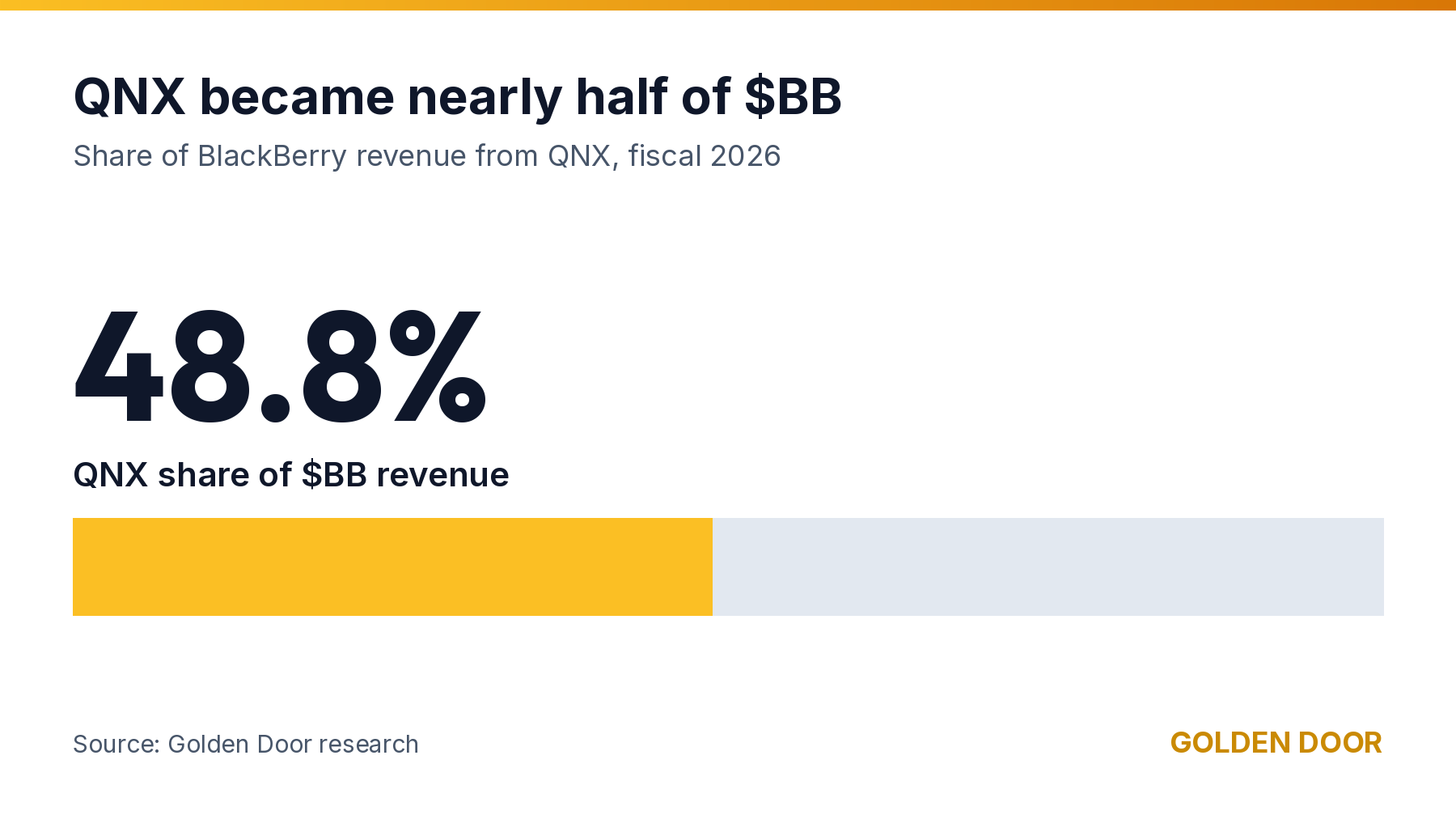
The open Today's theme: the business hiding inside a familiar name is often the one that decides the outcome. $MSFT: Q1 FY27 revenue rose 19% to $92.3B and Azure grew 48%. Microsoft's results $GEN: revenue grew 12% to $1.369B and the FY27 outlook went up. Gen's results $BB: QNX went from 28.4% of revenue in fiscal 2024 to 48.8% in fiscal 2026. Payroll without the hiring: $ADP revenue grew 6.74% while client employment grew 1%, and $PAYX PEO and Insurance grew 11.70% against 4.28% for the...
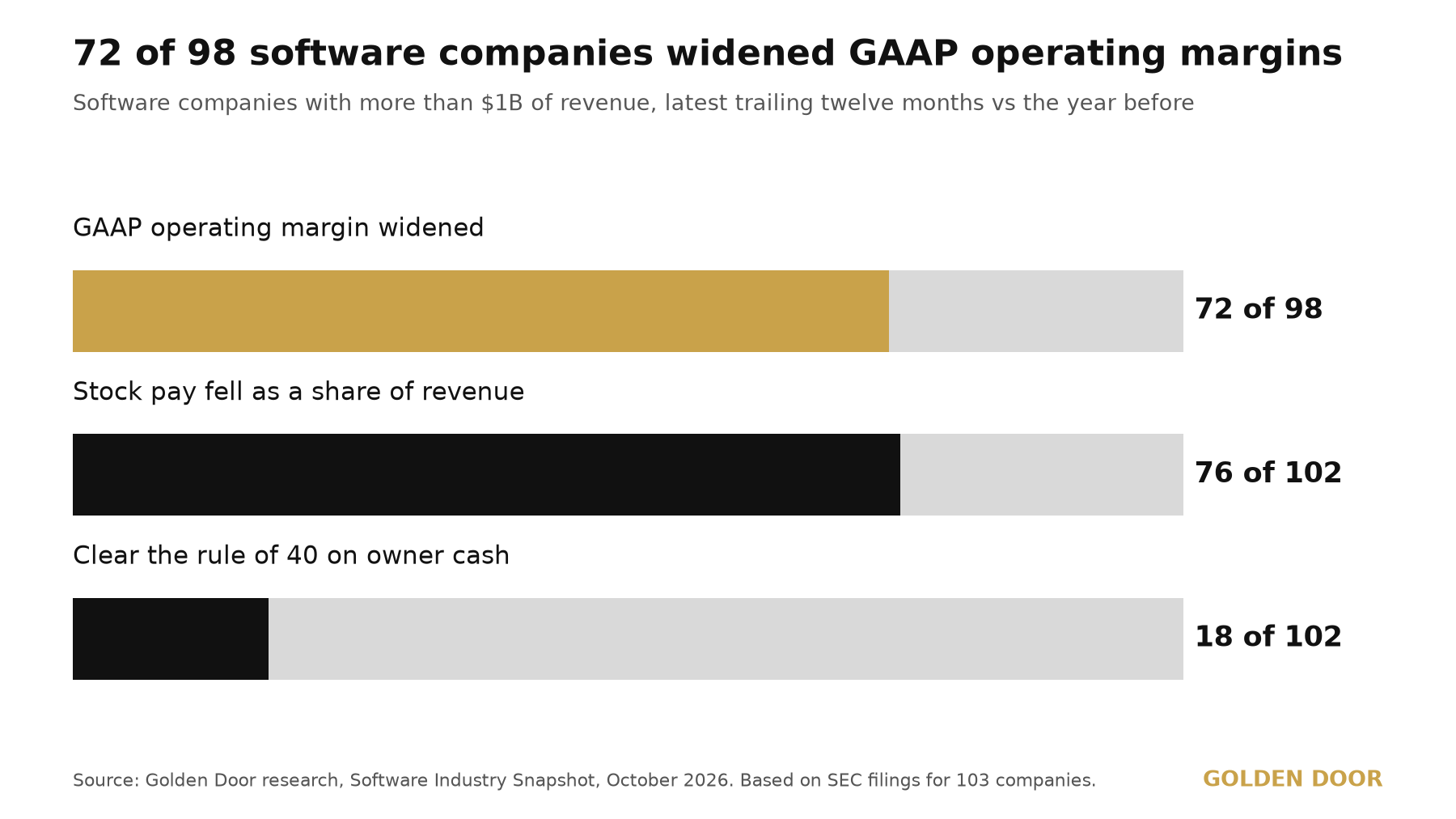
The open Tonight two very different software balance sheets face the same question: is the cash turning into returns? The Nasdaq rose 1.2% as the rally in compute names ran into a second day. Source $GWRE fell 6.6% after agreeing to pay $1.7B in cash for underwriting software maker hyperexponential. Source $CVLT slid nearly 10.9% before the open even as subscription ARR grew 20%. Source $MSFT: The best software franchise is now a capacity company Microsoft reports fiscal first quarter results...